
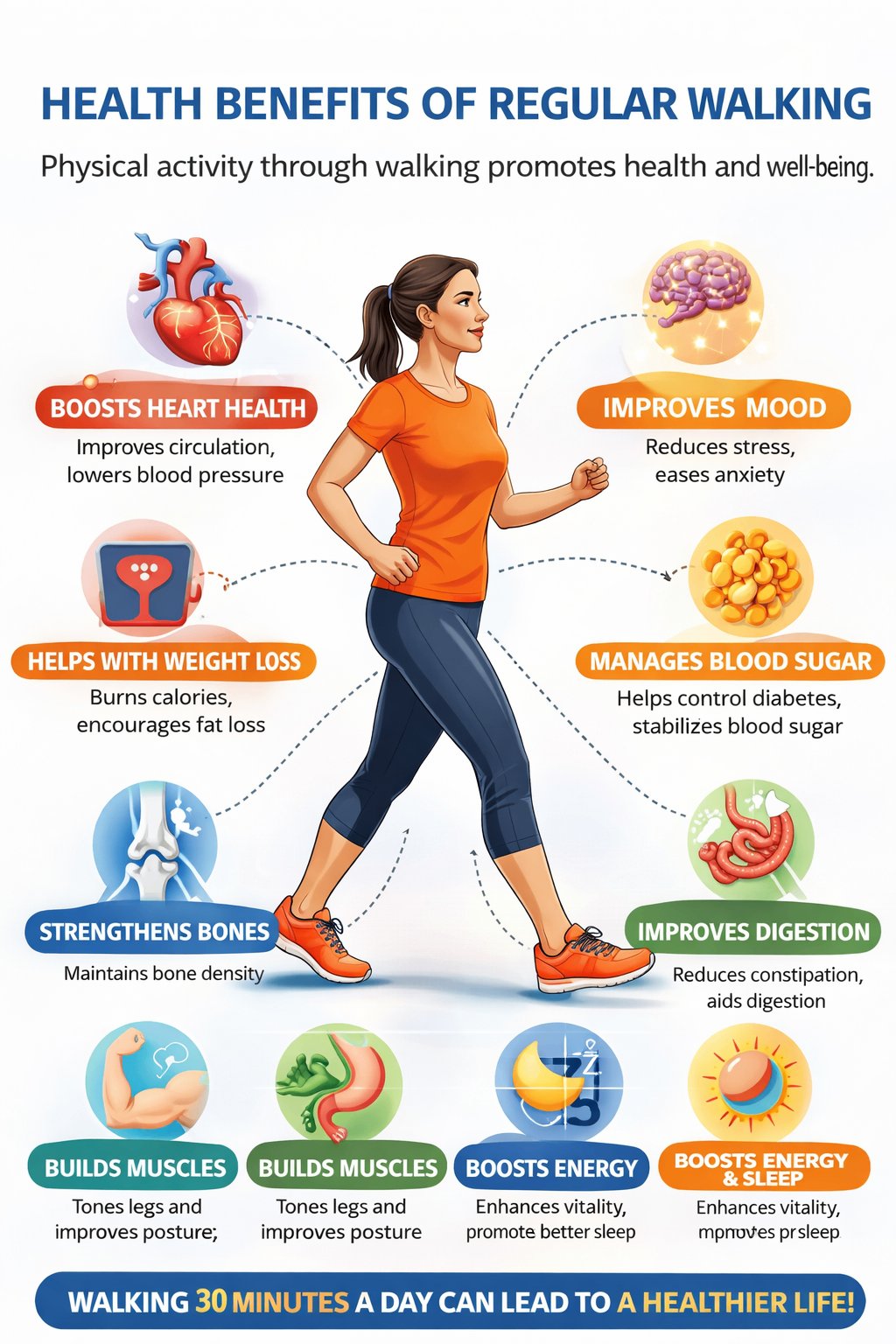
Walking is one of the simplest, safest, and most effective forms of exercise for people of all ages. It requires no special equipment and can be done anywhere.
Walking is a natural medicine. Just 30 minutes a day can greatly improve your physical and mental health.
Physical Health Benefits
Improves Heart Health -- Strengthens the heart, reduces risk of high blood pressure, stroke, and heart disease
Helps in weight Management -- Burns calories, reduces body fat when combined with healthy eating
Controls Blood Sugar -- Helpful for people with diabetes, improves insulin sensitivity #
Strengthens Muscles & Bones --reduces risk of osteoporosis, # Keeps joints flexible
Boosts Immunity # -- Regular walking improves overall body resistance
Mental Health Benefits
Reduces stress and anxiety
Improves mood
Helps reduce symptoms of depression
Improves sleep quality
Enhances memory and concentration
How Much Walking is Recommended?
According to the World Health Organization:
Adults: At least 150 minutes of moderate-intensity activity per week. Example: 30 minutes of brisk walking, 5 days a week
Elderly: Regular walking improves balance and prevents falls
Tips for Effective Walking
✔ Walk at a brisk pace # (you can talk but not sing)
✔ Wear comfortable shoes
✔ Swing your arms naturally
✔ Keep your back straight
✔ Start slow and gradually increase time
✔ Stay hydrated #
Best Time to Walk
Early morning (fresh air, calm environment)
Evening (relieves day stress)
Simple Goal to Start
If you are a beginner:
Start with 10–15 minutes daily
Gradually increase to 30–45 minutes
Role of the calf # in everyday walking
Venous return is the flow of blood back to the heart through the veins. In the legs, blood has to move upward against gravity, which is more difficult.
Daily walking significantly improves venous return, especially through the calf muscle pump (often called the “second heart” of the body).
Key:
1. When Insulin sensitivity is high, body cells efficiently absorb glucose from the bloodstream using only small amounts of insulin. When it is low (insulin resistance), body cells struggle to respond, requiring the body to produce much more insulin to maintain normal blood sugar levels. #
2. Osteoporosis means "porous bone." It is a bone disease making bones weak and brittle.
Why Osteoporosis?
Weight-bearing and muscle-strengthening exercises (like walking, jogging, dancing, resistance training, or climbing stairs) help by:
Stimulating bone-forming cells
Increasing or maintaining bone density
Strengthening muscles that support bones
Improving balance, which lowers fall risk, reduces the chance of fractures, especially in older adults.
Regular movement and stretching help joints move through their full range of motion.
3. To "boost immunity" means enhancing the body's natural defenses to protect against infections and diseases.#
4. A brisk pace refers to a speed that is fast, energetic, and efficient, but not quite a full sprint. #
5. Being hydrated means the body has absorbed and maintained an adequate, healthy level of water or fluids needed to function correctly. #
6. The calf muscle is a group of muscles located at the back of the lower leg, between the knee and the ankle, consisting of two major muscles—the gastrocnemius and the soleus—which merge to attach to the heel bone via the Achilles tendon. #